

15 Expert Packing Tips That Will Save You Time, Money, and Stress During Your Move
Packing is often the most time-consuming and overwhelming part of moving. Whether you’re relocating across town or across the country, how you pack can make the difference between a smooth move and a stressful experience filled with broken items and disorganization. After years of helping families and businesses relocate, we’ve gathered the best packing tips that will save you time, money, and countless headaches.
1. Start Packing Earlier Than You Think You Need To
One of the biggest mistakes people make is underestimating how long packing takes. What seems like it should take a weekend often stretches into weeks. Start packing at least six weeks before your move date, beginning with items you use least frequently.
Start with storage areas, seasonal items, books, and decorative pieces. As moving day approaches, you’ll gradually pack more essential items until only daily necessities remain. This gradual approach prevents the last-minute panic that leads to careless packing and forgotten items.
2. Declutter Before You Pack
Moving is expensive, and you pay based on weight and volume. Why pay to move items you don’t need, use, or even want? Before you pack a single box, go through your belongings with a critical eye.
Use the one-year rule: if you haven’t used something in the past year, seriously consider whether you need to keep it. Donate items in good condition to charity, sell valuable items online or through a garage sale, and responsibly dispose of items that can’t be donated or sold.
Decluttering serves multiple purposes. You’ll have fewer boxes to pack and move, lower moving costs, and less to unpack at your new home. You’ll also start fresh in your new space without unnecessary clutter.
3. Invest in Quality Packing Materials
While it’s tempting to cut costs by using old boxes from the grocery store or inadequate packing materials, this often backfires. Weak boxes collapse under weight, leading to damaged items and repacking hassles. Quality materials protect your belongings and make the moving process smoother.
Essential packing materials include sturdy moving boxes in various sizes, packing tape (lots of it), bubble wrap, packing paper, and markers for labeling. Specialty items like dish pack boxes, wardrobe boxes, and mattress covers are worth the investment for specific items.
If you’d rather avoid the hassle of gathering supplies, professional packing services from companies like TrustWay Movers & Logistics include all necessary materials and expert packing, often costing less than you’d expect when you factor in your time and the reduced risk of damage.
4. Use the Right Size Box for the Right Items
Box size matters more than you might think. A common mistake is packing heavy items in large boxes, creating boxes that are impossible to lift safely and risk breaking under their own weight.
Pack heavy items like books, tools, and canned goods in small boxes. These items are dense and add up quickly in weight. Medium boxes work well for most kitchen items, toys, and general household goods. Large boxes should be reserved for lightweight, bulky items like pillows, linens, comforters, and lampshades.
This approach keeps boxes at a manageable weight for lifting and prevents box bottoms from giving out under excessive weight.
5. Master the Art of Strategic Labeling
Labeling seems obvious, but there’s a right way and a wrong way to do it. Simply writing “kitchen” on a box isn’t enough when you have fifteen kitchen boxes and need to find your coffee maker on your first morning in your new home.
Label boxes with both the room destination and a brief description of contents. For example: “Kitchen – Everyday Dishes and Glassware” or “Master Bedroom – Winter Clothes.” Include “FRAGILE” in large letters on boxes containing breakable items, and add “THIS SIDE UP” arrows when contents should remain upright.
Take labeling a step further by numbering boxes and keeping a master inventory list. This way, you can quickly check if box 47 (containing your phone chargers) has been loaded on the truck or is still in the house.
Consider using colored tape or markers to color-code rooms. Assign each room in your new home a color, mark boxes accordingly, and provide your movers with a color-coded floor plan. This makes unloading incredibly efficient.
6. Pack Room by Room
Resist the temptation to randomly pack items from throughout your house into whatever boxes are handy. This creates chaos when unpacking and makes it difficult to find specific items when you need them.
Pack one room at a time, completely finishing that room before moving to the next. This keeps you organized, makes it easier to find things if you need them before the move, and simplifies unpacking. You’ll know exactly which boxes go in which rooms, and you can unpack room by room at your new home.
7. Use Your Linens and Towels as Packing Material
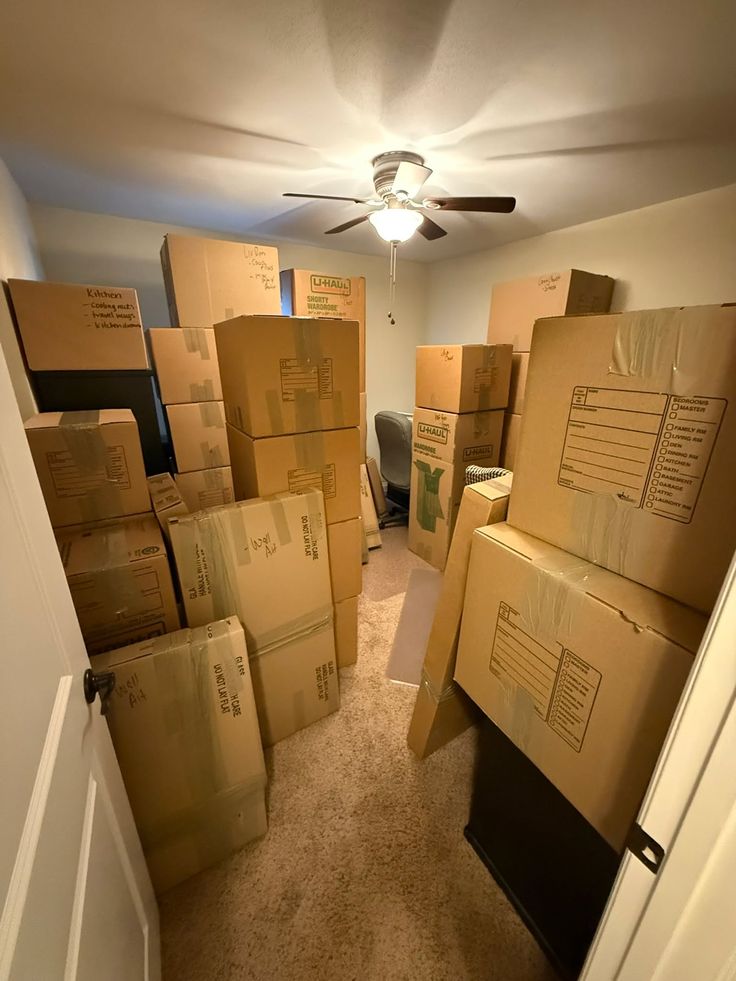
Bubble wrap and packing paper are essential, but you can reduce the amount you need by using items you’re already moving. Towels, sheets, blankets, and clothing make excellent padding for fragile items.
Wrap dishes in dish towels, use bath towels to cushion lamps and decorative items, and fill empty spaces in boxes with t-shirts and socks. This saves money on packing materials, reduces the number of boxes you need, and means you’re packing two things at once: the protective item and the fragile item it’s protecting.
Just remember to wash these items before using them at your new home, as they’ll likely pick up some dust and cardboard debris during the move.
8. Pack Plates and Bowls Vertically
This tip surprises many people, but packing dishes vertically (like records in a record store) rather than stacking them flat reduces the risk of breakage. When dishes are stacked flat, the weight of items above creates pressure that can cause cracks. Vertical packing distributes weight more evenly.
Wrap each plate individually in packing paper or bubble wrap, then place them vertically in a dish pack box with plenty of cushioning material at the bottom and between each plate. Fill any empty spaces with crumpled paper to prevent shifting during transport.
9. Create a "First Night" Essentials Box
Pack a clearly labeled box (or several) with everything you’ll need for your first 24-48 hours in your new home. This should be loaded last on the truck and unloaded first at your destination.
Include items like toiletries, medications, phone chargers, a change of clothes for each family member, basic tools, trash bags, paper towels, toilet paper, soap, snacks, paper plates and plastic utensils, coffee and a coffee maker, and important documents.
Having these essentials easily accessible prevents the frustration of digging through dozens of boxes to find a toothbrush or your phone charger after a long moving day.
10. Photograph Electronics Before Disconnecting
Modern homes have complex entertainment systems, computer setups, and other electronics with multiple cables and connections. Before you disconnect anything, take clear photos of how everything is connected.
Photograph the back of your TV showing which cables go where, your computer setup, your stereo system, and any other complex electronics. These photos will be invaluable when setting up your new home, saving you hours of frustration trying to remember which cord goes where.
Additionally, label cables and cords with tape indicating what they connect to. Store all cables and accessories for a device together in a labeled bag, and pack these bags with the devices they belong to.
11. Pack Jewelry and Valuables Separately
Small, valuable items like jewelry deserve special attention. Don’t pack jewelry in boxes with other items where it can get lost or damaged. Instead, keep jewelry in a small bag or box that you transport personally in your vehicle rather than on the moving truck.
For expensive items like engagement rings or heirloom pieces, consider wearing them during the move or storing them in a secure location. The same applies to important documents, cash, collections, and anything else that would be difficult or impossible to replace.
12. Properly Prepare Appliances
Appliances require special preparation before moving. At least 24 hours before moving day, empty, clean, and defrost your refrigerator and freezer. Leave doors slightly open to prevent odors and mold.
Secure washing machine drums according to manufacturer instructions to prevent damage during transport. Clean your oven and stove, and ensure they’re completely cool before moving. Disconnect and properly prepare dishwashers, being careful with water lines.
For small appliances like coffee makers, toasters, and microwaves, clean them thoroughly and pack them with adequate padding, ideally in their original boxes if you still have them.
13. Don't Overpack Boxes
It’s tempting to fit as much as possible into each box to minimize the number of boxes, but overpacked boxes are more likely to break open and can be too heavy to lift safely. Leave a little space at the top of each box for proper sealing and to prevent boxes from being too heavy.
If a box is so heavy you struggle to lift it comfortably, it’s too heavy. Break that load into two boxes. Remember that your boxes will be stacked during transport, and overpacked boxes on the bottom of a stack are more likely to collapse.
14. Pack Books Strategically
Books are deceptively heavy. A large box full of books can weigh 50-70 pounds or more, making it nearly impossible to lift and likely to break the box bottom. Always pack books in small boxes.
For hardcover books, pack them lying flat. For paperbacks, you can pack them spine down. Fill any gaps with packing paper to prevent shifting. If you have many books, consider whether this is a good time to donate ones you’ve already read or won’t read again.
15. Keep Hardware With Furniture
When you disassemble furniture, it’s crucial to keep all screws, bolts, and hardware together and associated with the correct furniture piece. Use small plastic bags to hold hardware, label each bag with what furniture it belongs to, and tape the bag directly to the furniture or keep all hardware bags together in one clearly labeled box.
Better yet, take photos of furniture before disassembling it and as you disassemble it, showing where each piece goes. This documentation, combined with properly stored hardware, makes reassembly much faster at your new home.
When to Consider Professional Packing Services
While these tips can help you pack efficiently, packing an entire home is time-consuming and physically demanding. Professional packing services offer several advantages:
Time Savings: Professional packers can pack an entire home in a day or less, compared to the weeks it might take you to pack yourself.
Reduced Stress: Let someone else handle the tedious, exhausting work of packing while you focus on other aspects of your move.
Expert Technique: Professional packers know the best methods for protecting various items and work with quality materials.
Insurance Protection: When professional movers pack your items, they typically assume greater liability for damage, giving you additional peace of mind.
Efficiency: Professional packers know how to maximize box space while maintaining proper protection, often resulting in fewer boxes than DIY packing.
TrustWay Movers & Logistics offers flexible packing services, from full-home packing to partial services where we pack only fragile items or specific rooms while you handle the rest.
Final Thoughts
Effective packing is both an art and a science. These tips, developed through years of moving experience, will help you pack more efficiently, protect your belongings better, and make unpacking at your new home much easier. Remember that packing doesn’t have to be a solo endeavor—whether you get help from friends and family or hire professional packers, accepting assistance can make the process much more manageable.
The key to successful packing is starting early, staying organized, and protecting your belongings properly. Take your time, follow these tips, and you’ll arrive at your new home with everything intact and ready to unpack.
Need help with your move?
Contact TrustWay Movers & Logistics for professional packing services and expert moving assistance:
📧 Email: trustwaymoversandlogistics@gmail.com
📞 Phone: 08962591830 | 09179900979
💬 WhatsApp: 9179900979
🌐 Website: www.trustwaymoversandlogistics.com
Let our experienced team handle the packing while you focus on the excitement of your new home!